How war became a place to find yourself
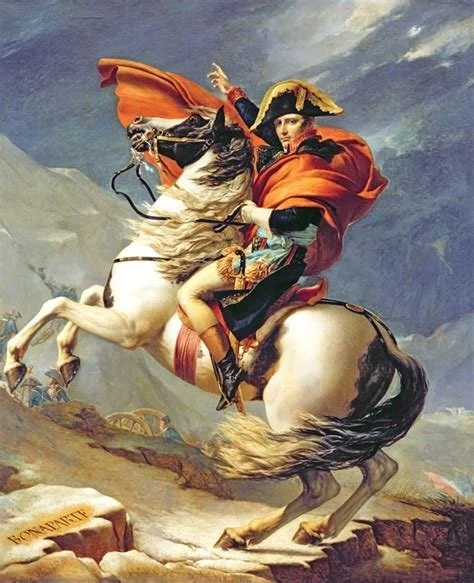
The experience of war is a well-worn theme in films, novels, memoirs, songs and poems. But the concept that fighting in a war is a life-changing experience is a relatively modern phenomena, according to internationally renowned historian Professor Yuval Noah Harari.
Where medieval soldiers’ experience of war was akin to an indifferent “whatevs”, the modern battlefield has become a place for, as Harari describes it, the “combat epiphany”.
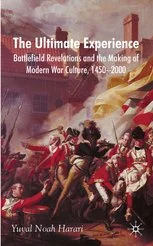
In 2008, he published The Ultimate Experience: Battlefield Revelations and the Making of Modern War Culture 1450-2000, in which by studying military memoirs from the Middle Ages to the present day, he came to see that war providing some privileged human truth is a new thing.
Harari argues that in the past, the internal experience of war was rarely examined. But for the past 250 years or so, and particularly now, being physically in war, “flesh-witnessing” as he calls it, provides some sort of revelation, a “message for all humanity”. (He got the term “flesh-witness” from a First World War veteran who wrote that “…the man who has not understood with his flesh cannot talk to you about it.”)
Whereas modern soldiers found truths, the main impression Harari got from reading the early memoirs of aristocratic soldiers was that they went through war “without learning anything new and without being changed in any profound manner.”
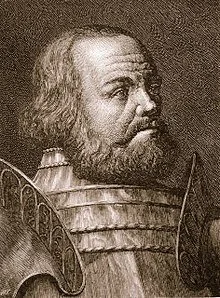
Take the knight and poet Götz von Berlichingen, who at the age of 23, had his hand cut off by a cannonball (1504). Despite this major injury, he goes on to fight numerous battles, aided by an iron hand. In his memoir, he rarely mentions his injury and in no way sees his war experience as a journey to discovering himself, as it often the case for contemporary soldiers.
Another warrior, Hieronymus Christian von Holsten was captured in 1660 and held as a prisoner of war for months. He and his fellow soldiers were given nothing to eat and lived off bits of raw horse-flesh. Whereas the trials of the modern POW fills war novels and movie screens, Harari points out that von Holsten’s experience is one paragraph.
Harari finds three main themes in early military memoirs:
* war as an honourable way of life
* war as an instrument for personal advancement
* war as an instrument for achieving collective aims.
Move forward a few hundred years, and war experience has drastically morphed into an existential revelation. As John Malcolm proclaimed in 1813 before his first battle, “in less than twenty-four hours hence, I might be wiser than all the sages and philosophers that ever wrote”. Or as US soldier Shawn Nelson says of combat experience in Mogadishu (1993), which became the subject of the movie Black Hawk Down: “It was hard to describe how he felt it was like an epiphany. Close to death, he had never felt so completely alive.”
So how did this enormous change come about? How did war go from “so-what” to “Oh-my-God”? How did we come to see soldiers and war veterans as having some secret truth about life? Harari delves deep into literature and philosophy to find out. Taking a cultural approach, he suggests it was the jamming together of a range of radical new thinking in the West around the eighteenth and nineteenth century.
One of the main drivers was an emerging “culture of sensibility”, which saw that ideas and knowledge were born from bodily sensation.
This was a big break from Descartes — who having earlier rejected the classic trinity of the soul, spirit and body — had proclaimed the dualistic body and mind split, with the mind ruling. (Descartes’ revelation apparently happened in 1619 when he was in the Bavarian army en route to winter quarters and caught by bad weather, got thinking in a stove-heated chamber.)
Sensationist philosophers now privileged the body, arguing one could only speak about something if they had experienced it. Furthermore, the feelings one had from these experiences were seen as being superior to intellectual musings. As a consequence, everyday emotional life became interesting and powerful. As Harari describes it: “Experiencing new tastes, new sights, new smells, new emotions became a key to expanding one’s horizons and wisdom.”
Artist J.M.W Turner lashed himself to the mast of a ship to feel a snowstorm at sea and later painted the experience in Snow Storm – Steam Boat off a Harbour’s Mouth. Goethe’s Faust remarks that “Feeling is all”. The Romantics would soon come to see that nature was a place to have pure, sublime experiences.
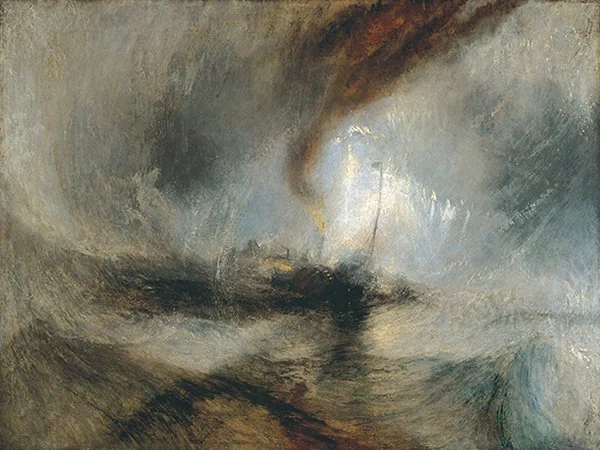
Turner’s painting
And it wasn’t long before the culture of sensibility was absorbed into the military. As Immanuel Kant wrote in 1790: “War itself …. has something sublime about it…”. Over time, war became a place for men to “explore and develop one’s full human potential”, writes Harari. Forget getting a job on a factory floor — there were truths to be found on the battlefield.
The Professor’s book also documents the pleasures of war, which was the topic of my PhD. He finds numerous examples of the positive side of war in the military memoirs. Carl Daniel Küster, a chaplain in Frederick the Great’s army, wrote in 1790 that:
‘The events of war which are important for reason, heart, humanity, fatherland and for one’s own life, write themselves with deeply engraved flame-script in the table of the human soul.’
His readings of 20th century memoirs find that “comradeship is the best thing revealed by war and experienced in war”. In the early memoirs, money was of more interest to mercenaries than the experience of war. “It all boiled down to coins, lands, and lucrative posts – what went on inside him was irrelevant,” he writes.
He discusses the diaries of Sebastian Schertlin von Burtenbach, a senior commander who fought in the 1500s. Terrible things happen — being forced to eat horses, donkey and dogs during a siege, losing all his followers in a battle — but his main interest of battle is how many florins he made.
There is a very small but growing body of work looking into the positive experiences that soldiers have in war but it is a controversial area. Anthropologists such as Thomas Randrup Pedersen, from the Royal Danish Defence College, has spent years with Danish troops and has explored how going to Afghanistan was a path for them to chase their “warrior dreams”. His 2017 study found it was a way for them to be “tried and tested in real life”, and the war experience is more “about oneself, one’s own desires, one’s own dreams”; the men were engaged in a “a project of self-becoming”.
What sorts of experiences do we expect people to have in war? Perhaps if they don’t fit into the trauma narrative, we just don’t want to know about them.
P.s. I published this piece on a blog called War Spot, which I started a few years ago.